
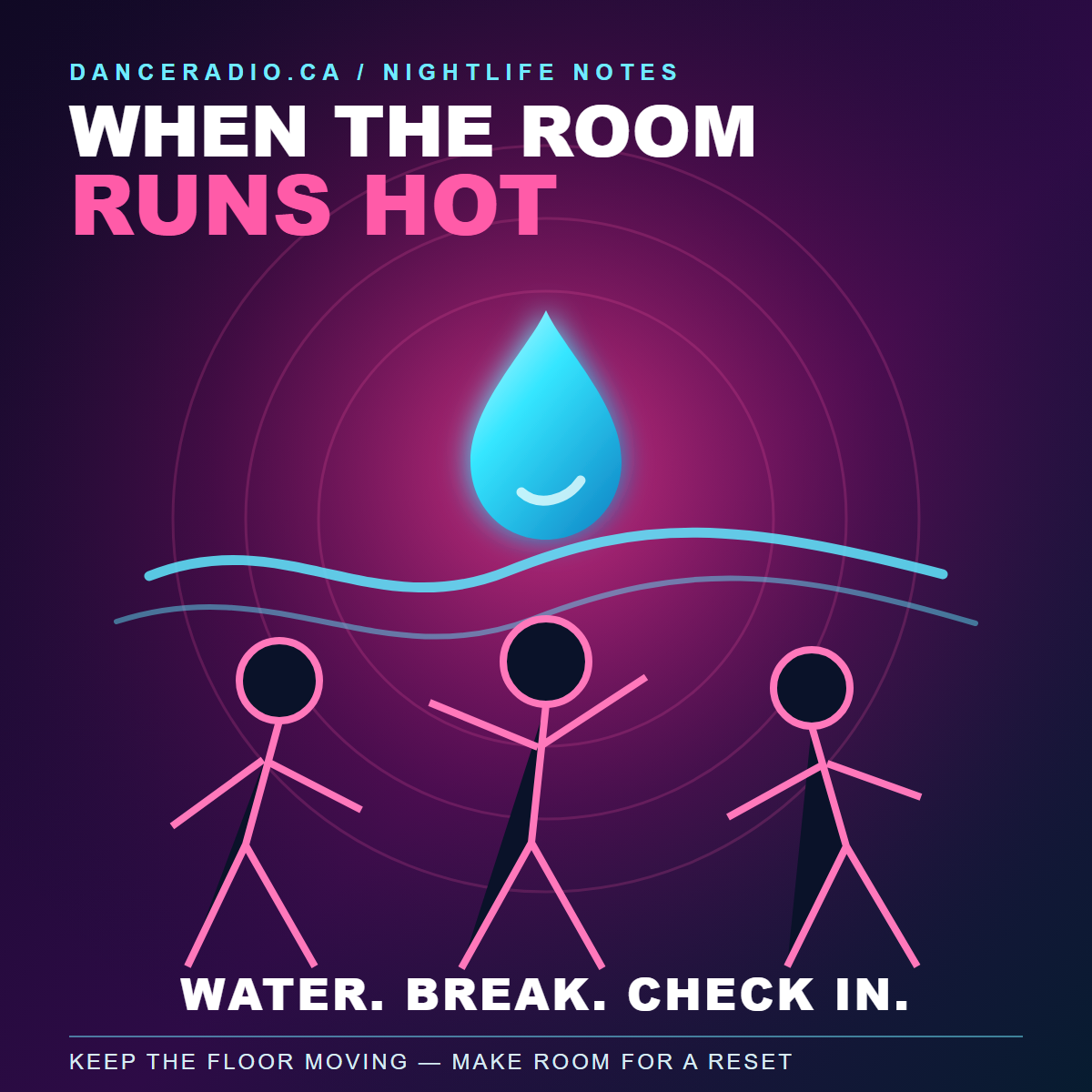
A good dance floor changes your sense of time. One track folds into the next, the room fills, and a quick hour becomes most of the night. Your body is still keeping score: movement makes heat, a crowd slows cooling, and a warm room can turn ordinary thirst into something more serious.
That does not mean the answer is to stand still. It means treating water and cool-down breaks as part of the night rather than an interruption to it.
Ottawa Public Health’s Party Safer guidance puts the essentials plainly: drink water, stay with friends you trust and look out for one another. Health Canada adds two important details—take extra breaks during physical activity in heat and drink before thirst becomes your only signal, because you can already be dehydrated without feeling dramatically thirsty.
Here is a practical way to make those ideas work on a real dance floor.
Start before the first drop
Heat management is easier when the night begins in decent shape. Eat normally, drink water before leaving, and know where you can refill once you arrive. If the event publishes a water policy, check it. At the venue, notice the bar, washrooms, water station, patio or other cooler area before the room is packed.
This is not about carrying a perfect kit or following a stopwatch. It is about removing small obstacles. If water is easy to find and your crew has a meeting point, you are more likely to take a useful pause before anyone is struggling.
Clothing matters too. Health Canada recommends loose, breathable clothing in heat. On a dance floor, layers you can remove are more useful than an outfit that leaves you trapped inside a heavy jacket. Coat check is not just a convenience when the room is warm.
Sip steadily; do not make thirst a contest
Health Canada recommends water before, during and after physical activity, and says water is best when symptoms of heat exhaustion appear. Ottawa Public Health likewise advises drinking plenty of water in hot conditions.
For a club night, the useful habit is simple: return to water regularly. Do not wait until your mouth is dry, your head hurts or the walk to the bar feels difficult. At the same time, more is not automatically better; this is not a challenge to force down huge amounts at once. Follow your thirst and the conditions, take steady opportunities to drink, and seek medical advice when your health or medication changes what is safe for you.
Alcohol is not a substitute for water. Ottawa Public Health advises avoiding alcohol during heat, and its Party Safer resources recommend starting low, going slow and sticking to one substance at a time. Whatever choices people make, a glass, can or bottle in hand does not necessarily mean they are hydrated.
A cool-down break protects the next hour
Leaving the floor for a few minutes can feel like missing the moment. In practice, a short break often protects the rest of the set.
Move somewhere cooler, loosen or remove an unnecessary layer, drink water and let your breathing settle. Health Canada recommends extra breaks during physical activity in heat and notes that the body needs time to recover.
Use the break to make a real check, not just a change of scenery. Is a headache building? Are you dizzy, nauseated, unusually weak or extremely thirsty? Are you sweating heavily, breathing fast or feeling faint? Those are signs Health Canada lists for heat exhaustion. Move to a cool place and drink water right away.
If you recover, return at a pace that feels comfortable. If you do not, the night can wait.
Check the person, not their dance moves
Friends are often the first safety system in a crowded room. Make a habit of noticing when someone changes: the friend who was animated is suddenly confused, cannot coordinate their movements, faints, stops responding normally or feels dangerously hot.
Do not assume they simply need to “walk it off,” and do not leave them alone. Get venue staff or medical help. Health Canada identifies confusion, lack of coordination, fainting and very hot or red skin as possible signs of heat stroke. Heat stroke is a medical emergency: call 911. While help is coming, move the person to a cooler place if you can, fan them and apply cool water to large areas of skin or clothing.
The NHS also advises staying with a person who is being cooled for heat exhaustion. That is good nightlife practice even before a situation becomes an emergency. One person can get water while another finds staff; the person who feels ill should not have to navigate the room alone.
The ride home is part of the plan
Heat and fatigue do not end at last call. After hours of dancing, give yourself a final pause before leaving: water, a check on the crew and a safe route home. Ottawa Public Health’s Party Safer guidance recommends planning a safe ride or walk and staying with people you trust.
If someone is still dizzy, confused, faint, vomiting or unable to cool down, getting them home is not the priority—getting medical help is. A rideshare is not a substitute for 911 when someone shows emergency signs.
The best nightlife habits are rarely dramatic. They are the friend who brings water without making it a lecture, the five-minute cool-down before the next room, the check-in that catches a problem early, and the decision to ask staff for help.
Keep the floor moving. Just remember that the strongest nights have room for a reset.
Keep exploring
- Keep the night loud: hearing protection for clubbers and DJs
- Ottawa after dark is bigger than the dance floor
- More DanceRadio features
- Listen live