The best nights are physical. The kick lands in your chest, the room moves as one, and a DJ can make a familiar record feel newly alive. None of that requires pretending our ears are indestructible.
For clubbers, DJs and everyone working around amplified music, hearing is part of the equipment. It is also easy to take for granted because noise damage is not always dramatic. You can leave a room hearing ringing or muffled sound, feel normal again a day later, and assume nothing happened. The National Institute on Deafness and Other Communication Disorders (NIDCD) warns that even when a temporary change seems to clear, residual long-term damage may remain.
This is not an argument for quiet dance floors. It is an argument for staying connected to them for years.
Loudness is only half the equation
Sound risk is a combination of level, time and distance. NIDCD lists concerts and music at maximum headphone volume in a typical range of 94 to 110 dBA, while noting that long or repeated exposure at or above 85 dBA can cause hearing loss. The louder the sound, the less time it takes to do harm.
Those figures are not a stopwatch for a night out. Sound levels move across a room and throughout a set, personal fit changes how well protection works, and phone readings are not a substitute for calibrated measurement. The useful rule is simpler: too loud, too close and too long all add to the dose.
The World Health Organization's global standard for venues and events recommends a maximum average sound level of 100 dB, live monitoring with calibrated equipment, optimized acoustics, audience hearing protection, quiet zones and staff training. That is a venue framework, not a promise that every place follows it or that 100 dB is harmless to every listener.
Put earplugs in before your ears complain
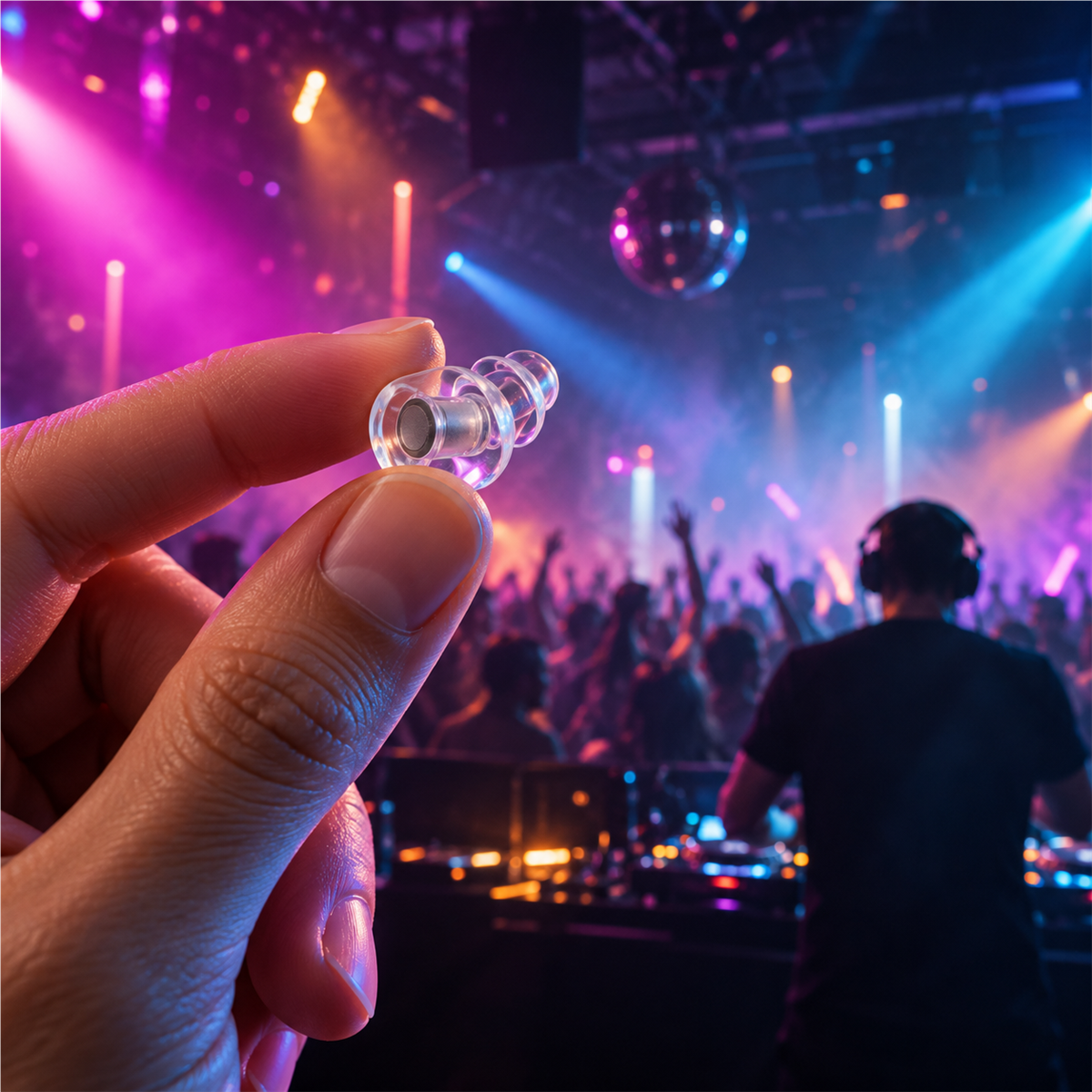
A good earplug reduces the sound reaching the ear. High-fidelity or “musician” plugs are designed to lower level more evenly across frequencies than basic foam plugs, so the balance of a mix can remain clearer. Foam plugs can provide strong protection too when fitted correctly. The best option is the one that fits, stays in and gets worn consistently.
Do not wait for ringing before putting them in. Bring them in a small case, insert them before the room reaches full volume, and follow the maker's fitting instructions. Carrying a spare pair is useful for a friend—and for the inevitable moment when one lands on the floor.
If a plug repeatedly loosens, hurts, or creates a poor seal, try another size or style. DJs and frequent venue staff may want to discuss reusable filtered or custom-fit protection with a qualified hearing professional. No product cancels risk completely; hearing protection works alongside lower exposure, greater distance and recovery time.
Build a floor routine
A few habits make protection easier without turning the night into a checklist:
- Step back from the stacks. Moving away from a speaker can meaningfully reduce the level reaching your ears.
- Take quiet breaks. Use a lobby, patio or designated quiet zone to give your ears time away from amplified sound.
- Keep the plugs in. Repeatedly removing them in the loudest part of the room defeats the point.
- Watch the full day. Loud headphones on the trip in, a club set, then louder headphones on the way home all contribute to exposure.
- Use measurements as prompts, not guarantees. A phone sound-level app can signal that a room is loud, but it is not a personal medical reading or a substitute for calibrated equipment.
For DJs, the dose can stretch across soundcheck, the set and time spent in the room before and after. Keep booth and headphone monitoring at the lowest practical level, take breaks when the job allows, and avoid responding to a loud booth by turning the headphones up again. Regular hearing checks can establish a baseline and help catch changes that are easy to miss day to day.
Know the warning signs
Ringing, buzzing or roaring after loud sound is tinnitus. Other warning signs include muffled or distorted sound, difficulty following speech in a noisy room, or needing more volume than before. NIDCD recommends having your hearing tested if you think you may have hearing loss.
Sudden hearing loss is different from the familiar temporary dullness people sometimes dismiss after a show. A rapid unexplained drop in hearing—especially in one ear—should be treated as a medical emergency and assessed immediately. Do not assume it is only wax, congestion or last night's sound system.
Venues shape the night too
Personal earplugs matter, but the responsibility should not sit entirely with the person buying a ticket. WHO's recommendations give venues a practical list: monitor and record levels, tune the room and system for quality, make hearing protection available, provide quiet areas, and train staff.
Good sound is not simply maximum sound. A well-run room can preserve impact while reducing harshness, hotspots and avoidable exposure. Free or clearly available earplugs at the door also remove the friction between knowing they help and actually wearing them.
Dance music is built around detail: the texture of a hi-hat, the air around a vocal, the pressure of a bassline and the way a transition changes the room. Protecting your hearing is not stepping outside club culture. It is protecting your ability to hear what makes the culture worth returning to.
Bring the plugs. Take the break. Move when the stack is punishing. Keep the night loud—and keep listening.