The light change can happen before the drop: the room goes dark, the beams tighten and a strobe begins cutting the dance floor into bright fragments.
For many people, that is an intense effect. For a smaller group, it can be a seizure trigger.
The Canadian Epilepsy Alliance says fewer than five per cent of people with epilepsy are photosensitive. That distinction matters. Epilepsy does not automatically mean flashing light is a trigger, and discomfort around strobes does not by itself establish a diagnosis. But when someone knows that flicker, flash or high-contrast patterns affect them, a club night needs more than a vague promise to “be careful.” It needs a usable route away from the effect and friends who know what to do next.
Treat lighting as part of the access check
Production can change from one event to the next, even in the same room. A venue that used slow colour washes last weekend may use strobes, moving beams or rapid video cuts for another promoter.
Ask a specific question before buying the ticket or leaving home: will the event use strobes, rapid flashing, high-contrast video or other intense lighting effects? Then ask when they are likely to appear, whether a warning will be posted and whether there is a lower-stimulation area that remains part of the event.
“There might be lights” is not enough information. A useful answer lets a person decide whether the night works for them and build a plan around the actual production.
This extends the whole-route thinking in DanceRadio’s accessible-nightlife guide. The entrance, floor and washroom matter, but so does the sensory environment. The practical question is not whether the venue calls itself accessible. It is whether a person can get accurate lighting information, move to a safer area and leave without being forced back through the strongest effect.
Choose the exit before the room changes
Find the route while the room is still easy to read. Identify a staffed bar, side corridor, lobby, patio entrance or quiet area away from the direct lighting field. Check whether leaving that area means leaving the event, whether re-entry is allowed and how a friend can reconnect with the group.
Do not rely on “meet us outside.” In a large venue, that can mean several doors, a coat-check queue and a wall of people using their phones. Pick one exact place and one exact person who will go with anyone who needs to step away.
Crowd movement matters too. The safest route is not necessarily the shortest if it cuts across the densest part of the floor. Use the same early-warning principle from DanceRadio’s crowd-pressure guide: move while you can still choose your own steps, not after the whole room is moving for you.
If someone has a personal seizure action plan, follow it. Know where they keep any medical information they want friends to use and who they want contacted. Do not improvise medication advice or assume that one person’s plan applies to everyone else.
If flashing starts, reduce the visual field and move
The Canadian Epilepsy Alliance recommends turning away from provocative light and covering one eye when unexpectedly approaching a flashing source, because the effect is more likely when the pattern fills the central field of vision and is seen through both eyes.
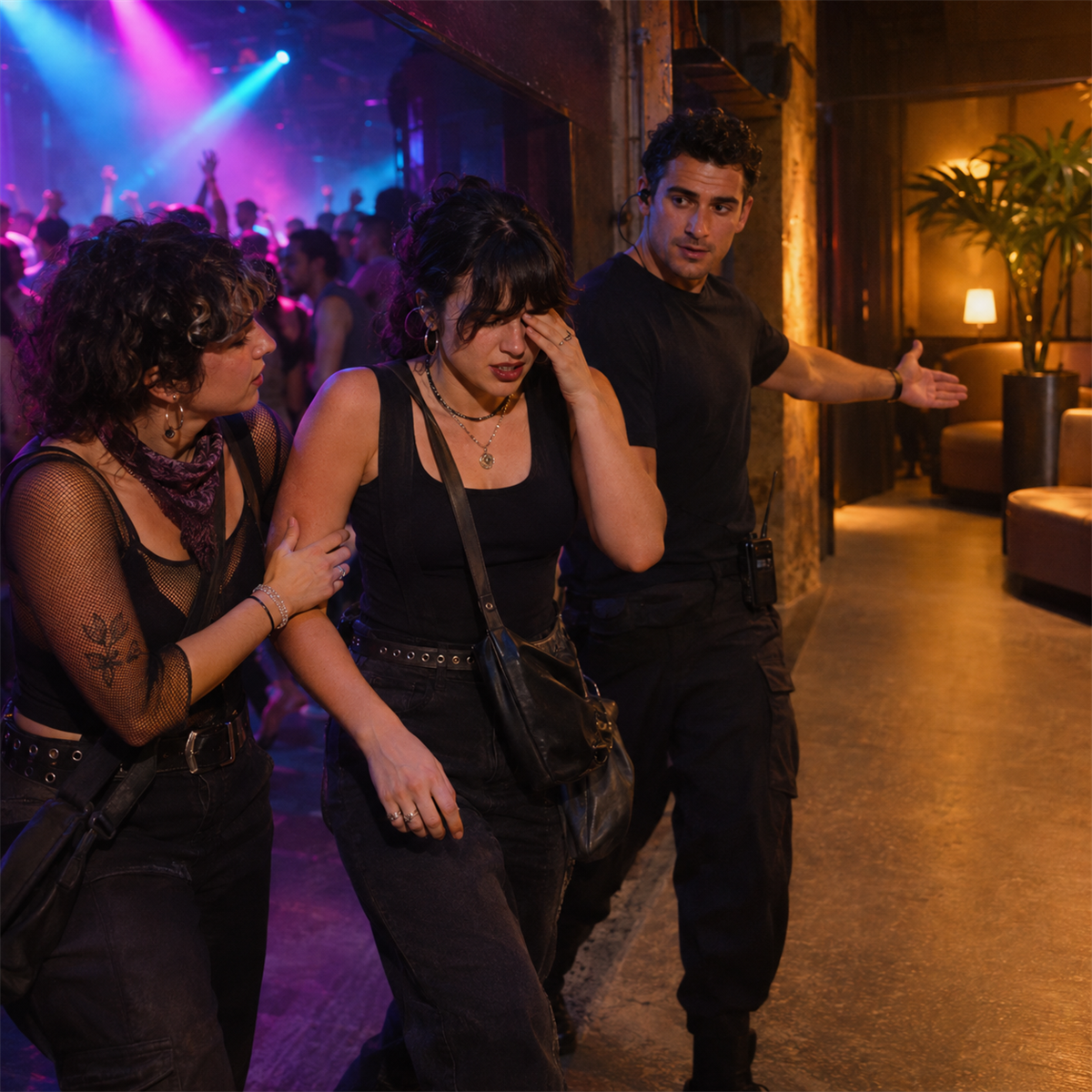
In a club, the useful sequence is simple: look away, cover one eye, tell a friend and move toward the pre-identified calmer area. Do not stare at the light to decide whether it is “bad enough.” Do not close both eyes and walk through a moving crowd alone.
A friend can take the outside position, keep the route clear and tell staff what is happening: “The strobes are a seizure trigger. We need the quiet corridor without crossing the floor.” That sentence gives staff a problem they can solve.
Once away from the effect, stay together. The person may need time in steady light before deciding whether to return, leave or seek medical help. A plan is not a promise to re-enter the room.
Recognize that seizures do not all look the same
Some seizures involve a fall and rhythmic shaking. Others may look like sudden staring, repeated blinking, facial twitching, jerking in one part of the body, confusion, loss of awareness or a brief inability to respond.
That variety is important in nightlife, where unusual movement or confusion can be dismissed as dancing, intoxication or fatigue. If someone’s awareness or behaviour changes suddenly, stay with them and get venue staff. You do not need to identify the seizure type before making the area safer.
If the person is still standing but confused, guide them away from stairs, traffic, glass and the edge of a stage. Speak calmly and use short directions. Do not grab or argue with them unless immediate danger requires you to block a hazard.
Make space, keep time and protect the person
The U.S. Centers for Disease Control and Prevention gives practical seizure first aid that translates well to a club:
- Stay with the person and keep others calm.
- Clear hard or sharp objects from the immediate area.
- If they are falling, ease them to the ground when possible.
- Put something soft and flat under their head.
- Turn them gently onto one side with the mouth pointing toward the ground when they are lying down.
- Loosen tight clothing around the neck and time the seizure.
Do not hold the person down. Do not try to stop their movements. Do not put anything in their mouth, and do not offer food or water until they are fully alert.
Call 9-1-1 if the seizure lasts more than five minutes, another seizure follows soon after, the person has trouble breathing or waking, they are injured, the seizure happened in water or it is their first known seizure. Also call when the person’s own action plan says to, or whenever the situation feels immediately unsafe.
Keep the surrounding crowd back without turning the person into a spectacle. One friend can stay close, one can bring staff and one can meet paramedics or retrieve essential belongings. Do not film. Protecting privacy is part of first aid.
Recovery is still part of the night
After a seizure, someone may be tired, confused, sore, frightened or embarrassed. Explain briefly what happened, offer to contact the person they named and give them time in a safe place. Do not pressure them to return to the floor, finish the event or travel home alone.
Check the route home again. The original driver, transit plan or pickup point may no longer be appropriate. Use a trusted companion and a plan that does not depend on navigating the same lighting, crowd or stairs that just became a problem.
Good lighting information lets people make their own decisions before the room changes. A clear exit route makes that decision usable. Friends who know seizure first aid make the night safer without making it smaller.
The goal is not to remove every dramatic lighting cue. It is to stop surprise from being the safety plan.
More DanceRadio features