
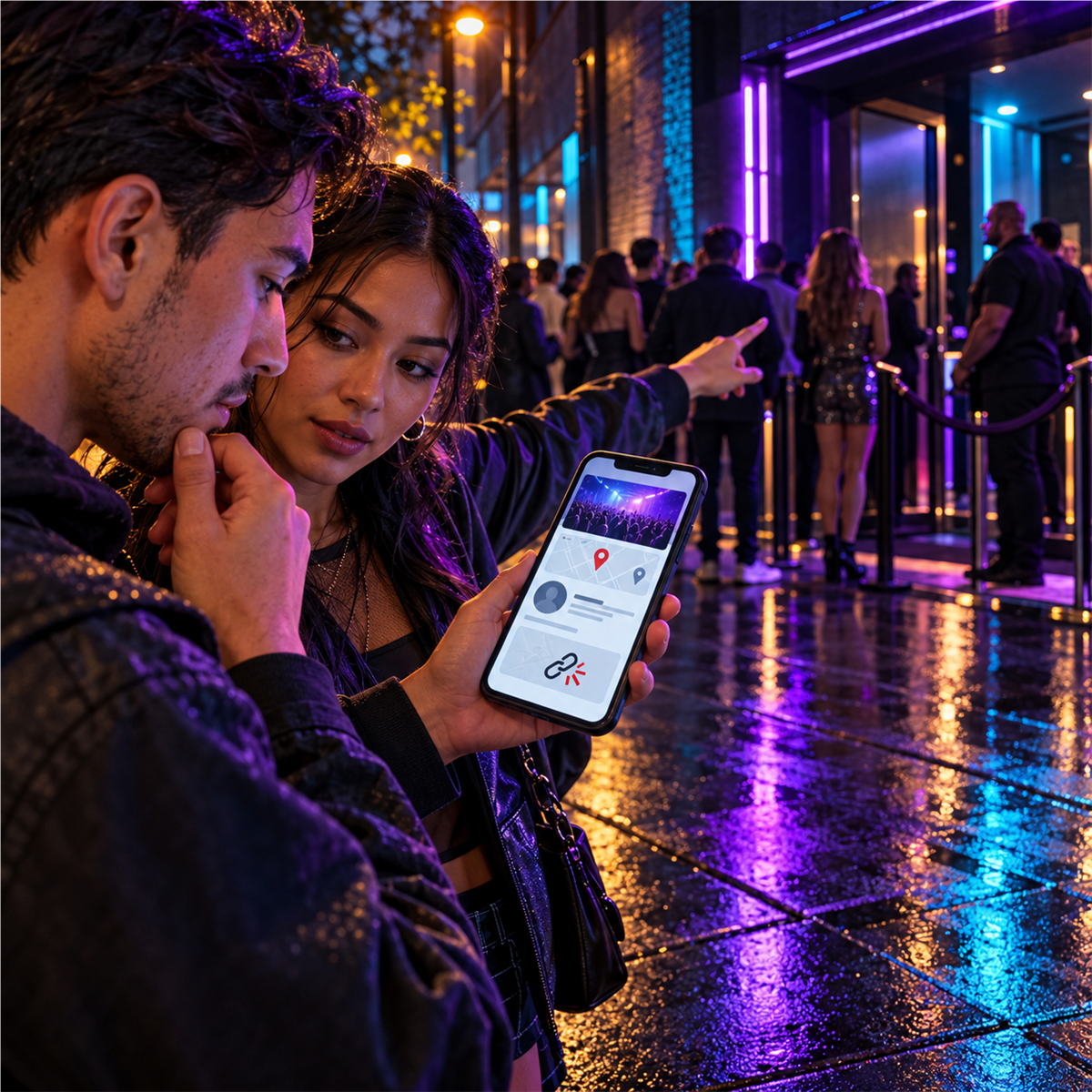
The flyer looks right. The date works. The lineup feels plausible. The price is just low enough to make waiting seem risky.
That is exactly when to stop scrolling.
A fake event listing does not have to look chaotic. It can copy a real venue photo, borrow an artist name, imitate a familiar ticket page and create urgency with a countdown or a claim that only a few tickets remain. The useful question is not whether the post looks polished. It is whether the night can be confirmed somewhere the seller does not control.
Before money moves, take two minutes and build a short chain of evidence.
Start with the venue
Open the venue's own website or established social account directly. Do not use the link inside the ad as your only route. Look for the same event date, promoter, artists and ticket link.
If the listing names a venue but the venue does not list the event, that is not proof of fraud. Small events can be announced late and calendars can lag. It is a reason to pause and ask the venue through a contact method you found independently.
The Competition Bureau recommends confirming event dates, venues and seating maps on the official event or venue website when buying from a reseller. For a club night without assigned seats, the same principle still works: confirm the room, date, doors and official ticket path.
Read the details as a set. A real venue paired with the wrong address, an artist appearing in another city that night, or a ticket link on a newly created domain can expose a copied listing. One mismatch is enough to investigate before buying.
Check who is presenting the night
Promoters and collectives sometimes work across several venues, so the event may live first on the promoter's own channels. Open those channels independently and look beyond follower counts.
Does the account have a history of completed events? Do venues, artists or photographers tag it from their own accounts? Are earlier listings followed by real night-of photos rather than endless presale graphics? Is there a working contact address that matches the organizer's usual domain?
None of those signals guarantees that a ticket is valid. Together, they help distinguish an established trail from a page assembled around one urgent sale.
Be careful with screenshots. A screenshot can show that an image exists; it cannot prove that a ticket remains valid, belongs to the seller or has not been sold to several people. The Competition Bureau specifically flags tickets offered as photos or screenshots instead of official digital formats.
Follow the official ticket path
Return to the venue or promoter page and use the ticket link published there. Compare its domain, event name, date, ticket type and final price with the page you first saw.
Look closely at the address bar. A familiar name with an extra word, swapped letter or unusual ending is not the same website. The Canadian Anti-Fraud Centre advises verifying web addresses before clicking and notes that fraudsters use fake ads, resale sites and fake company websites to offer items including event tickets.
A padlock only means the connection to that site is encrypted. It does not certify the seller or event.
If you are buying a resale ticket for an Ontario event, current provincial guidance says the listing must show the original total price and resale price, including fees and taxes. It also says buyers must receive written proof from the primary seller that the ticket is valid or a written money-back guarantee from the secondary seller or platform.
If those basics are missing, do not let a countdown make the decision for you.
Treat urgency as information
Real events sell out. Real presales end. Urgency is not automatically suspicious.
The warning sign is pressure that prevents verification: a seller who refuses a basic question, changes the payment instructions, insists the transfer happen immediately or moves the conversation away from a platform's protected checkout.
The Competition Bureau lists pressure to act fast, unusually low or high prices, missing receipts and requests for cryptocurrency or prepaid gift cards among ticket-fraud warning signs. It recommends payment methods such as credit cards that provide dispute and refund protection.
Ask yourself what protection remains after you pay. Can the transaction be traced? Is there a receipt? Is there a written refund or validity guarantee? Can you contact the seller through a verified channel?
If the answer to all four is no, the ticket is asking you to carry all the risk.
Keep the receipt and the route you used
Save the listing, seller profile, event page, full price, payment confirmation and every message. Keep the confirmation email rather than relying only on a ticket inside an app.
That record helps if the event changes, the barcode fails, the charge is disputed or the seller disappears. It also makes a report more useful.
If you believe you bought a fake ticket, contact the payment provider promptly and ask what dispute options apply. Report suspected ticket fraud to the Canadian Anti-Fraud Centre. Deceptive marketing practices can also be reported to the Competition Bureau, and complaints about Ontario ticket-sales practices can go to Consumer Protection Ontario.
Do not post a full barcode, QR code or ticket number while warning other people. That can expose a valid ticket to copying. Share the seller name, listing link and relevant facts without publishing the credential that opens the door.
A two-minute check protects the whole night
The strongest fake listing often borrows trust from something real: a venue, artist, promoter, photograph or sold-out event. Verification breaks that borrowed trust into pieces.
Find the venue independently. Confirm the event. Check the promoter's history. Follow the ticket link from a source you trust. Read the total price and guarantee. Use a protected payment method. Save the record.
If the details do not join up, step away. There will be another night, another room and another chance to hear the music. A countdown is not more important than knowing where your money is going.
Keep exploring
- Ottawa after dark is bigger than the dance floor
- When a drink does not feel right
- Access is part of the night
- DanceRadio Features
- Listen live