
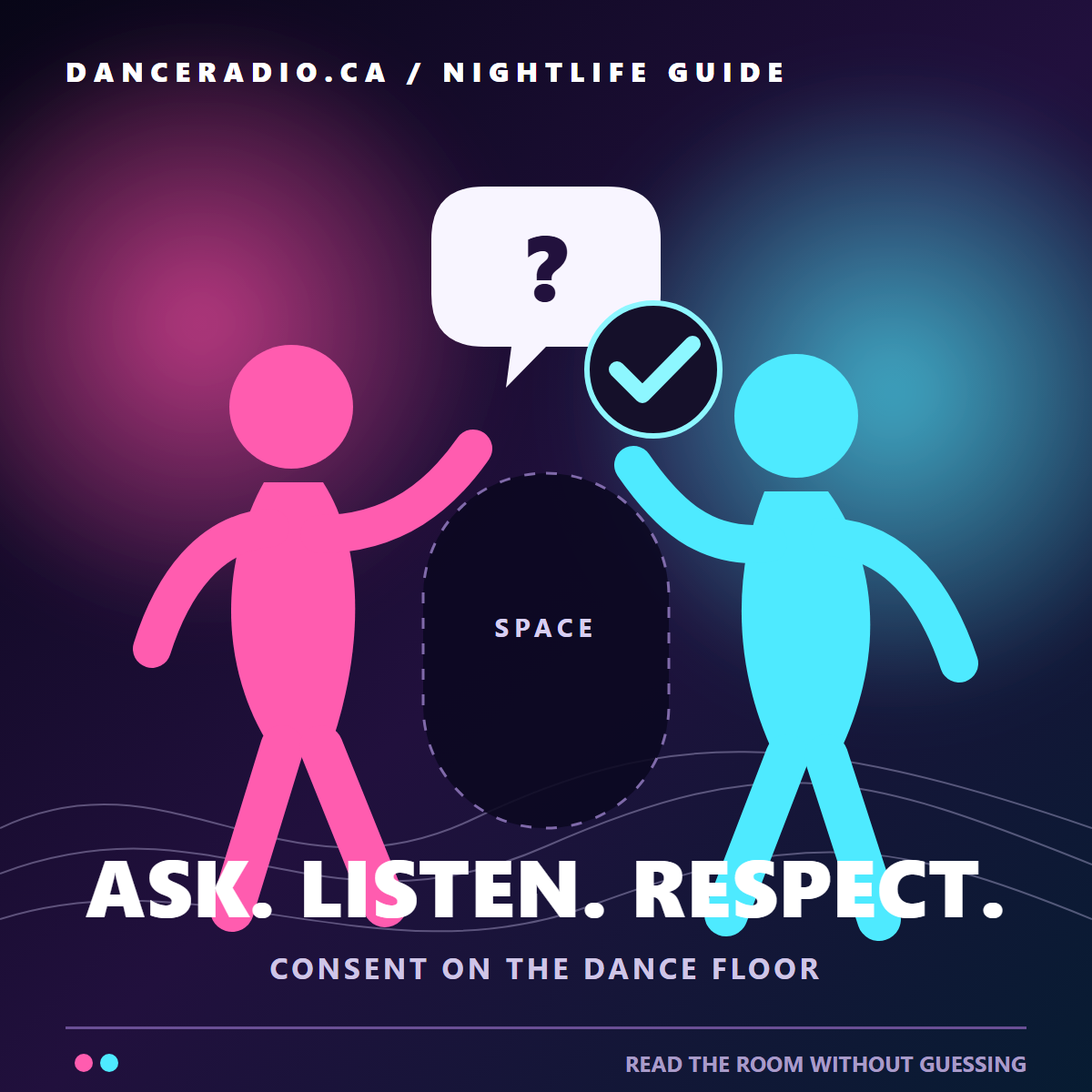
A dance floor is full of wordless communication. Someone makes space in a circle. A friend points toward the water station. Two people catch the same rhythm and move closer. The room works because people notice one another.
But noticing is not the same as knowing. A look, a smile or dancing nearby does not answer every question about touch, closeness, kissing, filming or what happens next. When another person's boundary is involved, the cleanest move is not to guess. Ask.
That does not drain the energy from a night. It protects the freedom that makes a good dance floor feel open in the first place.
An invitation is a question, not a claim
Inviting someone to dance can be simple: offer a hand, gesture toward the open space beside you, or ask, “Want to dance?” Then leave room for a real answer.
If the answer is no, uncertain or absent, let it end there. Do not block the person's path, keep asking, pull them closer or demand an explanation. A no does not need to become a negotiation, and politeness is not permission.
The same rule applies when a dance has already started. Moving together is not blanket agreement to touch someone anywhere, kiss them, follow them away from their friends or turn the interaction sexual. The Government of Canada describes sexual consent as active, willing and continuous; it cannot be guessed or assumed. Consent for one activity at one time does not automatically carry into something new.
On a loud floor, a clear check can be short: “Is this okay?” “Want more space?” “Can I kiss you?” The words matter less than making the answer easy to give—and respecting it immediately.
Keep the answer reversible
Consent is not a wristband issued at the door. Anyone can change their mind.
Pay attention when somebody steps back, removes a hand, turns away, goes still, stops responding or says they want to find their friends. Those cues are reasons to pause, not puzzles to solve. Create space and check in. If the answer is not clear, stop.
Ottawa Public Health says consent must be voluntary, enthusiastic and freely given for a particular activity at a particular time, without manipulation or threats. It can be withdrawn at any point. That standard is useful because it replaces mind-reading with a practical habit: ask, listen and keep listening.
Rejection can sting for a moment. Handling it well is part of dance-floor etiquette. A simple “all good” and a step back keeps the night moving without making the other person manage your disappointment.
Intoxication does not turn uncertainty into permission
Alcohol and other substances can affect a person's ability to understand and agree. Ottawa Public Health and federal guidance both make the boundary clear: a person who cannot respond clearly may not be able to consent.
If someone seems extremely intoxicated, confused, barely responsive or unable to make a clear choice, do not pursue sexual contact. Help them reconnect with a trusted friend or venue staff instead. If they are unconscious, having trouble breathing, having a seizure or in immediate danger, call 911 and get staff or medical help.
Looking after somebody is not permission either. Getting water, finding a coat or helping someone reach their friends does not create a debt and should never become leverage for touch or sex.
Bystanders can change the direction of a moment
You do not need perfect information or a dramatic confrontation to help. Ottawa Public Health describes bystander intervention as choosing to respond safely when you notice a potentially harmful situation.
Start with the person who may need support. A neutral interruption—“Hey, your friends are looking for you,” “Want to come get some water?” or simply “Are you okay?”—can create an exit without forcing them to explain in front of someone else.
If direct action might increase the risk, delegate. Tell security, bar staff, a promoter or another trusted person what you noticed and where. Bring a friend with you. Stay nearby if it is safe, and check in after the moment has passed. In an emergency, call 911.
The goal is not to win an argument or become the centre of the scene. It is to give the person options, reduce immediate pressure and connect them with help. Do not film someone in distress for content. Documentation can have a role when the affected person wants it or when staff or emergency services need details, but public posting can take away privacy and control again.
Phones need permission too
A club may have its own camera policy, but courtesy goes further than a sign on the wall. Before making one person the clear subject of a photo or video, ask. A wide crowd shot and a close-up are not the same thing. Neither is capturing a clip and publishing it to a searchable account.
Someone may be comfortable dancing beside you and still not want their face, location or night out posted. If they say no—or later ask for the image to be removed—respect that choice.
A better floor is made in small decisions
Consent is not a mood-killer. Pressure is.
The strongest dance floors leave people room to join, move, change their minds, find their friends and leave without being punished for it. They are built by the dancer who asks before touching, the person who accepts no without sulking, the friend who notices a sudden change and the bystander who gets staff instead of looking away.
Read the room, but do not make the room answer for someone. Ask the person. Listen to the answer. Make space for it to change.
That is not separate from club culture. It is how the culture keeps the floor open.
More DanceRadio features