
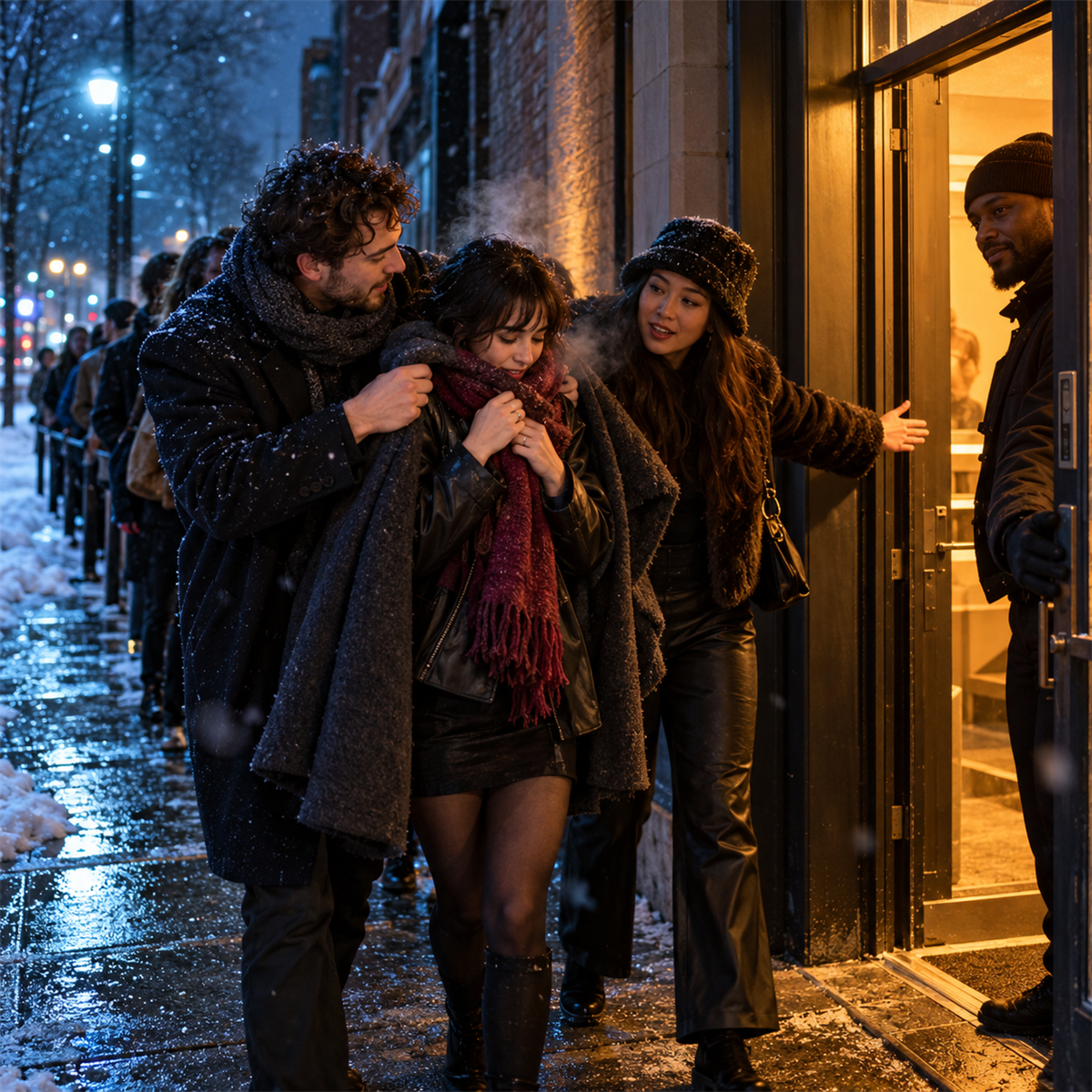
Inside, the room is warm enough to make a winter coat feel ridiculous. Outside, the ride is seven minutes away, the wind has found the space between your shoes and trousers, and somebody in the group is still waiting for coat check.
That short gap can become the coldest part of the night.
Cold exposure around a club does not begin only when a weather alert appears. Temperature, wind, wet clothing and time all matter. A long entrance queue, repeated outdoor breaks, a missed bus or a pickup that stops on the wrong block can turn a light outfit into a real safety problem.
Ottawa Public Health describes frostbite and hypothermia as preventable cold-weather injuries. The useful nightlife version of that guidance is simple: plan for the parts of the night that happen outside, keep the crew together and treat fumbling, stumbling or unusual speech as reasons to move—not as jokes to explain away.
Dress for the full route, not only the room
The outfit has to survive more than the dance floor. Check the forecast and wind chill before leaving, then think through the whole route: the walk to the venue, the entrance line, any outdoor break, the wait for transit or a ride, and the final walk home.
Ottawa Public Health recommends layers: a moisture-moving inner layer, an insulating middle layer and a wind- and water-resistant outer layer. A hat, gloves or mittens, a neck covering and waterproof winter footwear protect the areas that lose comfort and function quickly. The point is not to dress as though every night is an expedition. It is to bring enough protection that a delay does not become an emergency.
Use coat check when it is available, but do not let the coat become unreachable. Keep the claim ticket somewhere secure and take a clear photo of it. If the venue has a long closing-time queue, collect outerwear before the last possible moment. Nobody should be standing outside in indoor clothes while one person goes back for the group’s coats.
Sweat matters too. CCOHS explains that cold challenges the body through temperature, wind and wetness. If clothing is damp after dancing, add a dry layer before heading out and close the outer layer before the cold feels severe. Wet fabric and moving air can remove heat faster than the temperature alone suggests.
Treat every transition as a decision point
Most cold-weather trouble on a night out happens between destinations. Make the handoffs visible.
Before joining an outdoor queue, ask how long it is moving and whether the venue has a safe indoor waiting option. Before an outdoor break, decide how long the group is staying out and who is coming back in together. Before leaving at closing, confirm the real pickup point or transit departure while everyone is still warm.
If a ride is delayed, wait inside a staffed public place when that is allowed and safe. Do not keep walking without a plan just to feel busy. The same principle from DanceRadio’s safer trip-home guide applies here: the backup has to survive the reason the first plan failed. A second ride request that depends on the same closing-time congestion is not much of a backup.
Choose an outside meeting point that can actually be used in winter. “By the door” may mean standing in wind, blocking the exit or losing sight of one another in the closing crowd. A nearby staffed lobby, transit station or other open public place is more useful when the venue permits it. If you separate, send the exact location rather than “I’m outside.”
Notice the person whose hands stop cooperating
Cold stress does not always arrive as a dramatic collapse. Ottawa Public Health uses a memorable warning: look for someone who mumbles, stumbles or fumbles. CCOHS also lists poor judgement, behaviour changes, difficulty forming words, loss of coordination and fatigue among signs of mild hypothermia.
On a club night, those changes can be misread as intoxication or clumsiness. Do not spend time proving the cause on the sidewalk. If a friend cannot fasten a coat, keeps dropping a phone, speaks differently, seems confused or cannot walk steadily, move them toward warmth and get help.
Watch exposed skin as well. Frostnip and frostbite often affect fingers, toes, ears, the nose and cheeks. Pain or stinging can give way to numbness. Skin may look unusually pale, waxy or discoloured depending on the person’s skin tone and the severity of the injury. Numbness is not evidence that the problem has passed; it is a reason to act.
People do not all respond to cold in the same way. Fatigue, some health conditions and medications, earlier cold injury, alcohol and nicotine can increase risk. Build the plan around the person who needs warmth first, not the person who says they are “fine” the loudest.
Move to warmth and get the response right
Bring the person into a warm, staffed place as soon as possible. Tell venue staff what you observed: “They are fumbling with their coat, their speech has changed and they cannot walk steadily.” Ask for medical help rather than leaving the person alone while the group debates the ride.
Replace wet clothing with dry layers when possible, cover the head and neck and warm the person gradually. CCOHS advises gentle handling and warns against rubbing cold-injured skin or using intense direct heat. Do not put a numb hand against a radiator, use very hot water or massage an area that may be frostbitten.
Hypothermia is a medical emergency. Call 9-1-1 for confusion, marked loss of coordination, drowsiness, weak or stopped shivering, reduced responsiveness, slowed breathing or any rapid deterioration. Follow the dispatcher’s instructions, keep the person sheltered and do not make them walk it off.
For suspected frostbite, seek medical attention. Do not rub the area or thaw it if there is a real chance it will freeze again before care is reached. Ottawa Public Health advises immediate medical attention when serious cold injury is suspected.
Do not offer alcohol as a way to warm up. It can create a sensation of warmth while increasing heat loss. If the person is fully alert and responsive, a warm non-alcoholic drink may be comforting, but it is not a substitute for shelter or medical care.
Put the cold-weather check into the crew plan
The best time to solve the winter gap is before the group reaches it.
Share the forecast. Bring outerwear that works for the longest likely wait. Keep coat-check tickets and phones secure. Confirm a warm meeting point and a trip-home backup. When the group leaves, make the final check explicit: coats on, gloves found, ride confirmed, nobody outside alone.
This is not about turning a night out into a survival exercise. It is about respecting the part of the night the venue cannot heat. The queue, the break and the ride home belong to the plan too.
More DanceRadio features